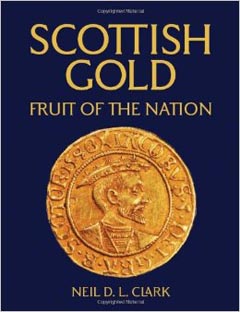
Scottish Gold
Amber: Tears of the Gods
As Curator of Palaeontology for the Hunterian Museum, Dr Neil Clark was nicknamed "Jurassic Clark" by the Times Educational Supplement for his work on all aspects of Scotland's fossil heritage. His interest in dinosaurs began with the discovery of a four toed track in northern England, while his discovery of the world's smallest dinosaur footprint resulted in his appearance in the Guinness Book of World Records.
The Hunterian Museum is Scotland's oldest public museum and home to one of the largest collections outside the National Museums in the United Kingdom. As an integral part of the University of Glasgow, the museum is a central resource for research and teaching in the arts, humanities and natural and medical sciences.
Many exhibits at the Hunterian feature collections relating to specific topics in geology and palaeontology. Scottish Gold examines the scientific and historical aspects of this precious metal in Scotland from prehistoric times to the present day. The book, written by Dr. Neil Clark, is a companion to the museum's special exhibition, richly illustrated with many of the exhibit artifacts and their original geological settings.
The Hunterian Museum exhibition featured many treasures that are presented in the companion book. Notable amongst these treasures were the King's Gold Cup from the Leith races of 1751, Queen Victoria's gold collar of the Order of the Thistle, cloth of gold from the tomb of Robert the Bruce, Bronze and Iron Age gold torcs, large nuggets discovered in Scottish rivers, numerous gold coins minted with Scottish gold, and modern creations by Scottish goldsmith Graham Stewart.
Interest in gold mining has revived in Scotland since the late nineteenth century, when explorers retuning from the gold rushes in Australia and California began prospecting the Scottish hills in Fife and Sutherland. Earlier periods of gold mining in Scotland date back to the reigns of James the IV and V when large nuggets were discovered in parts of the Leadhills; gold that was then converted into coinage and royal regalia.
Scottish Gold appeals to scholars, enthusiasts, and to the ordinary reader, with its authoritative content and factual accuracy. Organized into eight chapter topics with full annotation, this book begins by examining the chemistry of gold and its many applications. The geology of gold deposits in Scotland is analyzed together with the methods of prospecting and extracting the metal as practiced since its earliest discovery. The history of gold objects found in Scotland began in prehistoric times and spans the Bronze and Iron Ages, followed by the Roman and Viking eras. The narrative concludes with chapters relating to more modern artifacts and the future of gold in Scotland, with the growing popularity of leisure panning at the gold resorts of Wanlockhead and Kildonan and a new mine opening in Tyndrum.
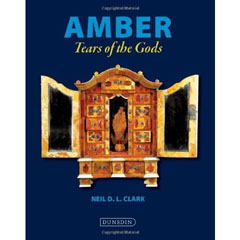
Combining geology with palaeontology, Amber - Tears of the Gods spans the millennia on a journey through the fascinating and turbulent history of a natural substance that has inspired countless myths and legends. Once treasured as gold, the mysterious characteristics of amber have been admired since the earliest times. It is found in abundance along the southern shores of the Baltic seas where this fossilized tree resin has shaped the economies of the region for centuries. Amber continues to be applied across the world for jewelry and decorative crafts, as well as for medical and scientific uses.
Neil Clark delivers a highly enjoyable survey of this remarkable substance, introducing its origins and explaining its composition. He explores the folklore that has grown up around amber while tracking its movements along historical trade routes. Amber - Tears of the Gods takes the reader on a journey of discovery to learn about its many uses as an object of beauty and its significance to modern science. The book is attractively illustrated with a well constructed narrative, written for collectors, scientists, and for those who are looking to enhance their appreciation for all of the extraordinary artefacts that have been created.
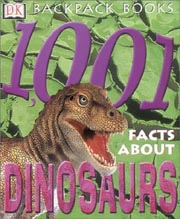
1001 Facts About Dinosaurs and the Pocket Book of Dinosaurs are handy reference guides with full illustrations and pictures both of actual fossils, skeletons, and modern science reproductions of dinosaurs. They answer many questions about specific types of dinosaurs, their anatomy, and modern discoveries in the field. These pocket volumes also include resource and pronunciation guides, a glossary, and a complete index.
Dinosaurs are a huge subject, and these handy references contain volumes of information on all things relating to dinosaurs and the world they inhabited. The books are beautifully illustrated with drawings, fossils, skeletons, and realistic models. Silhouette comparisons between the dinosaurs and a modern human add perspective to these enormous reptiles. While there is still much to be discovered about these prehistoric creatures, these are great books for a well-rounded general knowledge of dinosaurs.
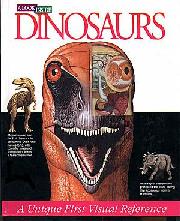
The books are well organized, with sections covering different types of dinosaurs and other sea and air animals. Readers are introduced to the field of dinosaur research, their anatomy, the first dinosaurs, and their eventual extinction. The reference section offers the names and addresses of many dinosaur museums and sites along with the invaluable pronunciation guide.
All of these books will delight dinosaur devotees. Younger children who are amazed by dinosaurs will enjoy this with some help, and those older than 10 years will absorb all of the facts by themselves.
Neil Clark has also written material on the subject of dinosaurs for the Encarta Encyclopedia and the Dorling Kindersley Millennium Encyclopedia. Two other books by Neil include: A Look Inside Dinosaurs with Readers Digest and The Dorling Kindersley Pocket book of dinosaurs. They can be found in most countries in numerous languages. If you discover any language versions, aside from Japanese and Greek, please let Neil know.