Hide and Seek:
The Psychology of Self-deception
Psychiatry
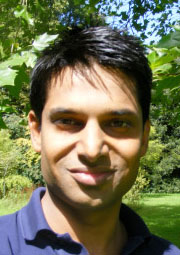
Neel Burton is a scholar, psychiatrist, philosopher, writer, wine-lover, and perpetual student who lives and teaches in Oxford, England. He is the recipient of the Society of Authors' Richard Asher Prize, the British Medical Association's Young Authors' Award, and the Medical Journalists' Association Open Book Award. He also runs the Oxford Wine Academy and the Meaning of Madness Course. In a presentation to the TEDxMaribor symposium, Neel proposes a controversial reversal to the common treatment of depression in western societies in a talk titled: "The Anatomy of Melancholy: Can depression be good for you?"
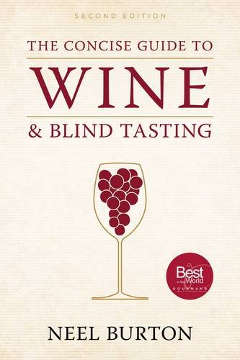
Wine lovers will enjoy The Concise Guide to Wine and Blind Tasting to help fulfill their thirst for knowledge. Neel Burton, together with James Flewellen, have compiled this guide for students, professionals, and the general connoisseur to identify and understand the most important factors affecting wine varieties and vintages. The guide is also a unique resource for those who practice blind tasting, where the origin and other distinguishing factors of a wine being sampled are withheld from the wine taster.
In pursuit of an ageless fascination, Neel Burton applies his vast knowledge of the workings of the human mind, while James Flewellen draws upon his expertise in biophysics and competitive wine tasting in a highly successful collaboration. As founders of the Oxford Wine Academy, the authors reflect their passion for wine and blind tasting in a useful and entertaining volume.
The challenge for a blind-taster is to compare the combination of unique characteristics exhibited in the wine being sampled, using only the taster's sensory perceptions, memory, and cognitive abilities. Every variety of wine exudes a highly complex set of characteristics, the result of centuries of cultivation, fermentation, and civilization. No two bottles are ever quite the same, even within the same vintage, as the chemistry involved in the fermentation process continues to evolve over time.
The Concise Guide to Wine and Blind Tasting takes the reader through all of the aspects involved in evaluating a particular wine, providing substantive detail to enable tasters at any stage of experience to describe the qualities of specific varieties and vintages. Expressing these descriptors is shown to involve human consciousness as much as the physical senses, while also drawing upon the richly conceived lexicon exclusively connected with wine tasting.
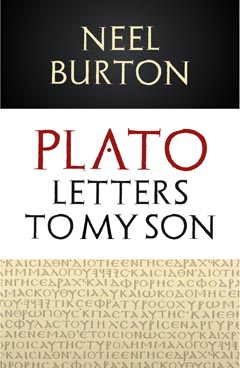
Philosophy of the western mind has indulged writers for centuries, extending Plato's shadow with each succeeding generation. While no greater subjects have engaged the soul of modern man as those first postulated by this father of western philosophy, Plato is revealed as a true doctor of the soul in an original novel by Neel Burton, Plato: Letters to My Son. A story told in the form of letters written on his death bed to a fictional son Adimantes, this novel weaves the life of Plato into the rich historical and cultural fabric of classical Greece.
This narrative reflects upon a life experience that spanned much of the known world, in a style that speaks directly to the reader about an age when philosophy and philosophers were a source of great popular attraction. It depicts a world of great beauty and of great conflict, adding character to the people and events that shaped a brief, though brilliant era. Burton brings a human dimension to a world where scholarship and discovery enjoyed centre stage. His deep understanding of classical philosophy is expressed with eloquence and a captivating fluency that makes reading this book a thoroughly enjoyable experience.
In a sense we are all Plato's son, the objects of a literary device designed to pass along his wisdom to a new generation. Each of the letters that describe the people and events that shaped Plato's world are an accurate reflection of the written historical record, much of which is attributed to Plato himself, recounted in the first person and in the present tense. The mathematical discoveries and advances in scholarship that characterize the classical age are revealed with a human dimension that eloquently portrays their significance to the development of western consciousness.
Living up to this legacy, Plato: Letters to My Son resonates with a great many themes that continue to influence contemporary social discourse. It exhorts us though our fascination with the healing philosophy of the soul to transform ourselves into better citizens and companions.
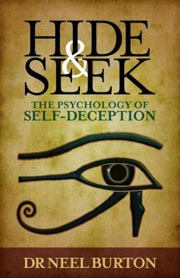
The boundaries between philosophy and science are transcended through coherent reasoning and articulate expression. Hide and Seek - The Psychology of Self-Deception continues Dr. Neel Burton's exploration of the human mind and its perception of the physical world in which we exist. It is the third in Burton's series of books on mental health, written for those who are prepared to examine their innermost thoughts and feelings and lend greater meaning to their lives.
The science of self-deception is readily defined in terms of a large number of ego defense mechanisms that have been identified as operating to protect one's self from painful truths. These ego defense mechanisms are grouped into four main categories: abstraction, transformation, evasion, and projection, which represent the primary means for minimizing perceived threats to the ego and more specifically to mitigate the fears and anxieties that these threats pose to the individual.
While a greater understanding of these defense mechanisms can help us to live better, it can also shed light into a darker side of human nature. In raising a multitude of conditions expressed by human nature and the human condition, Burton introduces a health warning that the topics being discussed, while not intellectually demanding, are nevertheless emotionally challenging and likely to provoke a violent reaction. Readers, on the other hand, have responded that Hide and Seek - The Psychology of Self-Deception has helped them to examine themselves in ways that they had not previously considered, revealing personal insights into the ego defense mechanisms that are helping or hindering their search for personal happiness.
Burton draws upon a broad spectrum of literary references, philosophical paradigms, current affairs, and personal anecdotes to explain each of the thirty-eight specific ego defense mechanisms covered in this book. One reviewer characterizes his style as 'motivational interviewing,' an approach similar in practice to the method known as Socratic Questioning, where a discussion is framed to encourage the 'development of insight and active thought.' By guiding readers to question how they are living their own lives, Burton encourages the development of insights that lead the reader towards a greater sense of personal responsibility, a more confident and tolerant approach to life, and a constructive direction for achieving clarity and inner happiness.

For a philosopher to continue to elicit discussion and debate after twenty four centuries speaks volumes about the profound influence of his ideas on human development. The volume of work attributed to Plato eclipses those who preceded his era and formed the basis of science and Western philosophy in the centuries to follow. Plato's Shadow: A Primer on Plato provides a useful reference point for study of the dialogues and letters ascribed to Plato. It offers a succinct overview of each dialogue while acquainting the reader with the philosopher's life and times.
Neel Burton's Primer on Plato is unique by treating each work separately, summarizing their principle themes while preserving the aesthetic and emotional appeal of the original texts. The well written and accessible style of Plato's Shadow engages the general reader who is encountering the unrivalled scope and incisiveness of the works for the first time. By the same token, students and scholars benefit from the book's precise structure as a preliminary step before delving into any one of the dialogs.
The range of Plato's dialogues extends human thought far beyond the realm of everyday experience. Plato is never a participant in any of his dialogues, which are often narrated by his mentor Socrates, or presented in dramatic form, leaving readers free to absorb a variety of perspectives and to arrive at widely differing conclusions. Plato conceived philosophy as a means to true understanding, often denying the reality of the material world by arguing from the perspective of Socrates in his earlier dialogs that knowledge is a matter of recollection, or divine insight, rather than the result of empirical observation.
By delivering a comprehensive overview of the immense range of thought represented in these writings, Plato's Shadow: A Primer on Plato is an excellent addition to every library.
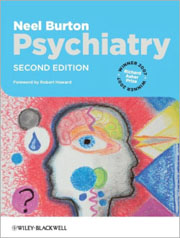
Dr. Burton approaches the complex ethical and philosophical issues that are inherent to the practice of psychiatry. The third edition of Psychiatry is a comprehensive textbook that draws upon material in the arts and humanities to provide a fresh and innovative cultural approach designed for medical students and health care professionals.
Fresh, in writing a book that is clear and concise while comprehensive and detailed, Neel Burton emphasizes important areas of a science that address the very essence of what it is to be human. Innovative, by making psychiatry come alive through detailed case studies and the use of numerous examples from the worlds of art, film and literature to emphasize the biopsychosocial model that is especially pertinent to this branch of medicine.
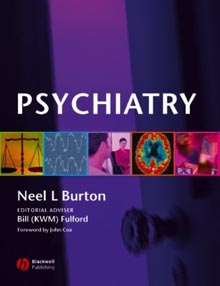
Professor John Cox, Secretary General of the World Psychiatric Association in Geneva, writes in the foreword to Psychiatry that the values-based practice emphasized in this book should in future form an important part of medical undergraduate training, where doctors require an "understanding of their own psychological, cultural, and spiritual assumptions in order to practice in a multicultural society."
For Neel Burton, the field of psychiatry comes alive in facing up to the "empirical and conceptual challenges that hinder its progress and leave it exposed to criticism". Psychiatry considers the historical context of the long-standing differences between the humoral and spiritual approaches to mental illness, a debate originally emanating from the ancient Greek words psyche and iatreia, or "healing of the soul," It is indeed this spiritual, and often religious, dimension to the field that makes it different from other medical specialties.
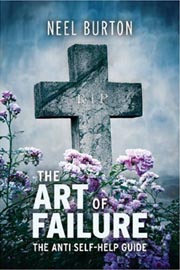
In The Art of Failure - The Anti Self-Help Guide, Neel Burton examines the relationship between the modern concepts of success and failure. This book explores what it means to be successful and, if indeed it is within the realm of possibility, how true success can be achieved.
As the book title suggests, common perceptions of success are turned on their head. Burton argues that we spend most of our time and energy chasing success, such that we have little left over for thinking and feeling, being and relating. As a result, we fail in the deepest possible way. We fail as human beings.
A wide range of relevant topics is covered which relate to the preoccupation with chasing personal success. The book begins with a definition of the mania under discussion and proceeds to consider the concepts of freedom, fear, courage, and values in this pursuit. The deeper meanings of death, ghosts, and madness are also examined. It concludes with a positive view of the influence of happiness, friendship, and truth for achieving more healthy objectives in life.
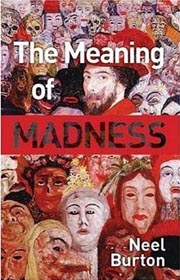
Neel Burton breaks new ground writing in the field of psychiatry by representing mental disorders in the context of literary, philosophical, and scientific sources. The Meaning of Madness provides a highly readable and authoritative account of mental health issues, one that demonstrates the connections between madness and human nature.
While mental illness is commonly portrayed in a negative light, The Meaning of Madness examines adaptive or evolutionary advantages that might be exhibited by different types of disorders, by evaluating these disorders from a more positive perspective. This approach is a clear departure from the often polemical or over-technical material covered by other books on this subject.
The Meaning of Madness helps to define the boundaries between mental disorder and normality by reaching beyond science to consider the mind's relationship with language, art, religion, and culture. It covers a broad range of conditions including: personality and identity, schizophrenia, depression, psychosis, manic depression, anxiety, and suicide.
The complexities of human nature that distinguish us from other animals offer intriguing insights into the workings of the mind. This book considers the peaks and valleys of human behaviour with a style that is at once accessible to the generalist reader and by the same token stimulates the medical professional to delve further into the world of mental health.
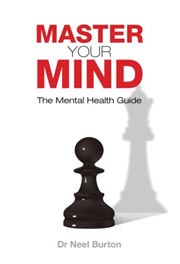
Master Your Mind is written for individuals who are contending with a mental disorder. It provides a practical guide to identifying specific mental disorders along with their diagnoses and available treatments. Friends, family, and carers of those suffering from mental illness will also benefit from the information presented in this book.
This book is designed to alleviate the fears and feelings of isolation that are often associated with mental illness and to enable suffers to better manage their condition. It provides advice for seeking treatment and services that are available from medical professionals and advice for patients to gain greater control over their illness.
Master Your Mind covers five main aspects for treating mental disorders: a thorough description of mental disorders and their diagnosis; techniques for mastering your mind through your mind; techniques for mastering your mind through your body; psychological and physical treatments; and, mental health care services and the law.
Neel Burton emphasizes that the best approach for treating mental disorders is the active involvement of the individual patient in the treatment process. It recommends specific methods for patients to cope with stigma and to build self-esteem, while managing stress and anxiety. It covers the types of available therapies and medications while advising patients on fighting depression and preventing relapses, with the aim of improving the chances for leading a healthy, productive, and fulfilling life.
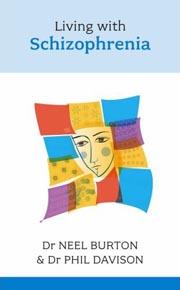
Addressing the need to make medical and treatment information accessible to people suffering from the debilitating illness, Living with Schizophrenia offers sufferers guidance towards understanding the illness and the treatments available to them. This book bridges the gap between medical literature and the often inconsistent and unreliable information available to the public. It enables sufferers and their carers to gain more control over their lives by dispelling misperceptions and providing useful information and advice.
Schizophrenia is an illness that affects millions of people who experience symptoms ranging from acute paranoia to visual and auditory hallucinations. It often leaves the sufferers withdrawn, and incomprehensible or frightening to others. While the illness is feared, sufferers are at most risk of harming themselves rather than others. Treatments with current medicine and therapy can have a high rate of success. As a result, it is important to provide patients with practical information about the symptoms and treatments, to discuss it openly, and to assist them on their path to recovery.
Living with Schizophrenia won the Medical Journalists Association Open Book Award 2008.
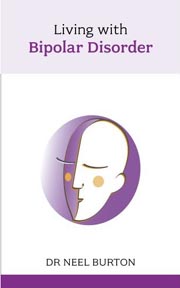
Continuing with the theme to support those living with mental illness, Living with Bipolar Disorder provides an in-depth view of the important topics related to this condition. This book is intended to provide sufferers and their carers with an accurate and reliable source of information that will assist people to manage this illness in their daily lives.
Affecting one in every one hundred people, bipolar disorder is a common condition that involves recurring episodes of elevated and depressed mood. It can pose a serious threat to physical health, careers, and relationships. Living with Bipolar Disorder offers simple and practical advice for living with this illness and for alleviating its associated fears and feelings of isolation.
By gaining greater knowledge of this illness, suffers are better able to cope with the causes and triggers and are better able to seek treatments available from medical professionals. This book explains what is currently known about bipolar disorder and proposes sensible lifestyle changes that can make a real difference for leading a healthy and fulfilling life. It is essential reading for all who are affected.
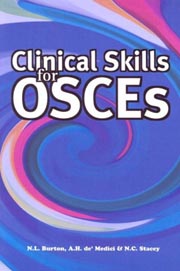
Objective Structured Clinical Examinations (OSCEs) are structured as real-time exercises during which the examiners ask questions that require immediate responses. As such, preparations for these examinations involve considerable rehearsal and drills in order that the answers are readily available when they are needed. Clinical Skills for OSCEs uses a systems-based approach to cover all of the clinical skills that are likely to be tested, including a total of 110 scenarios which involve the practical understanding of history taking, examination, and medical procedures.
Clinical Skills for OSCEs is a comprehensive study guide to prepare for the examinations, with scenarios contributed by current medical students and recent graduates. Each of the scenarios covered in this book contains an introductory statement of the task for that station, followed by a brief overview with tips, and a step-by-step guide of how to carry out the station. Instead of attempting to teach candidates medicine or surgery, this guide gathers and organizes a large amount of information and presents it in a structured and memorable fashion.
Candidates for the examinations benefit from the vast amount of information compiled in a single resource guide that is easy to read and to the point, together with valuable boxes of additional background information relating to each testing station. From cranial exams and hearing tests to psychiatric assessments and basic life support, all of the necessary proficiencies are detailed. Since these exams require demonstrable skills, Clinical Skills for OSCEs gives those preparing for them step-by-step profiles of the capabilities needed for success.