
The Memory House
The Shadow of the Wind
Lucia Graves has performed literary translation for twenty five years, publishing more than thirty volumes, mostly from English into Spanish or Catalan and also translating works into English, for many authors including Anaïs Nin, Emilia Pardo Bazán, Katherine Mansfield, Carlos Ruiz Zafón, and Robert Graves. The autobiographical novel A Woman Unknown is her first original work, followed by The Memory House, a fiction novel, first published in Spanish as La Casa de la Memoria.
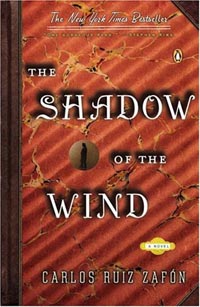
Her translation of The Shadow of the Wind by Spanish writer Carlos Ruiz Zafón, is an internationally acclaimed bestseller. Together with a cast of colourful characters, Ruiz Zafón has created a superbly entertaining story in a florid literary style.
In the fine English of Lucia Graves, the original subtleties and wit of the book are conveyed complete with Zafón's rich similes and metaphors. The Shadow of the Wind is set among the secrets of post-war Barcelona, where the son of a bookseller is entrusted with a rare book by an almost forgotten author whose life and death is shrouded in mystery. It is a masterful novel of hope, mystery, and love that follows the young bibliophile as he discovers that someone has been destroying all copies of books by the forgotten author.
As his quest to uncover the life of this mysterious author continues, plunging deeper and deeper into the enigma, he encounters sudden disappearances, and a trail of many broken lives that give rise to a darker plan. Throughout the many twists and turns of an intricate and complex plot, entwined with passionate and forbidden love affairs, Carlos Ruiz Zafón introduces humorous interludes and eccentric secondary characters. This is an epic story of murder, madness, and doomed love that someone will go to any lengths to keep secret.
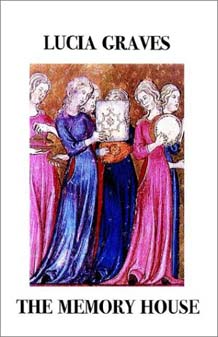
The Memory House is the first fiction novel by Lucia Graves. It is based on the expulsion of Jews from Spain in 1492 and tells the story of Alba de Porta who lives contentedly with her mother Regina in a large old house in the Jewish quarter of Girona, on the northeast coast of Spain.
Raised by her grandfather, an enlightened Rabbi who instilled in her the rudiments of Jewish mystical thought, Alba undertakes to preserve an important religious text when her family is expelled from Spain by Monarchs' decree. Prevented from carrying the text with her, Alba is asked to memorise it in order to ensure its safe exit from Spain.
She uses the architecture of her family home as a memorising aid to retain the words of the book in her mind; thus, when she leaves, she also takes with her the house of her ancestors and its entire contents on what proves to be an eventful and difficult journey, crossing the Pyrenees into Southern France, then traveling on to Italy and finally reaching the Ottoman Empire.
The memorised book plays a fundamental role in Alba's story: it guides her through the labyrinth of life, love and death and at the end of the journey is the key that will open the door of her past and reveal an unexpected secret.
The Memory House has also been published in Turkish by Gözlem as Anilar Evi, in Spanish as La casa de la memoria published by Seix Barral, and as La Maison de la Mémoire in France by Anatolia.
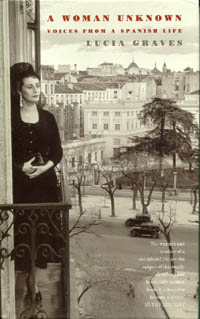
Emerging from the shadow of her illustrious father, Lucia Graves shares a captivating autobiographical portrait of life in Spain in A Woman Unknown. A Woman Unknown traces Lucia's childhood on the island of Majorca during the Franco dictatorship, her studies in Geneva and Oxford, and the later years spent raising a family in Catalonia
Both at one with the people of Spain and apart, Lucia found herself continually bridging the gaps between Catalan, Spanish and English, as she picked up the patterns and nuances that contain the essence of each culture.
"Although many English writers have opened windows on Spain ...none has done it so intimately and so personally as Lucia Graves. This is a book of high literary achievement and extraordinary humanity." TLS
"Her memoir is layered, just as she is, echoing the struggles of a divided people to become whole again." The Daily Telegraph
"A highly revealing account, not only of a woman's life, but of a whole extraordinary passage in one contemporary European country... it should be read by everybody interested in Spain and in women's special history in the present century." Financial Times
A Woman Unknown was also published in French, Polish, Dutch, Spanish and Catalan.
Lucia describes her experience at the International School of Geneva in a chapter entitled 'Raining in my Heart':
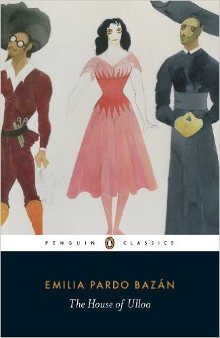
Emilia Pardo Bazán is recognized as one of the most important novelists writing in the Spanish language during the late nineteenth-century, and her classic novel The House of Ulloa as one of the period's greatest Spanish novels. Combining gothic moments with humor and social satire, Emilia Pardo Bazán's best known work offers an entertaining mix of comedy and farce with realism and a sense of hysteria in her characters.
This English-language translation by Lucia Graves and Paul O’Prey recreates the author's unique and unorthodox approach to naturalism especially through the rich depiction of life in the rural countryside. When a pious young priest is sent to bring order to a crumbling country manor, he is confronted by a riotous cast of characters ranging from the irresponsible Marquis de Ulloa, to the estate majordomo and the majordomo's daughter, who happens to be the mother of Marquis de Ulloa's illegitimate son.
When the inexperienced priest makes arrangements for the Marquis to marry a more suitable and cosmopolitan cousin, this prospect bodes ill for the majordomo who has set his sights on gradually taking control of the estate's assets and to make his grandson the rightful heir. The course is thus set for all of the characters to pursue their own interests while suffering the consequences of their actions in the ensuing chapters.
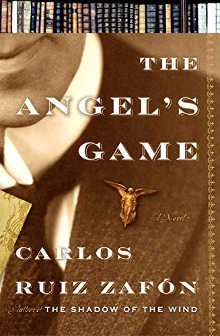
The Angel's Game by the renowned Spanish author Carlos Ruiz Zafón is a thriller set in the notorious Raval district at the center of Barcelona, where a reclusive writer encounters powers that test the limits of human nature. In the words of Carlos Ruiz Zafón, The Angel's Game is in some respects a prequel to his acclaimed novel The Shadow of the Wind, and represents another facet in a series of novels that are intended to explore themes from different angles, while all sharing the world of literature, books, reading and language.
Introduced in The Shadow of the Wind, the idea behind the four-part Cemetery of Forgotten Books takes on a much darker personality in The Angel's Game. This second installment is a stand-alone story that can be enjoyed in its own right, while sharing some interconnections and characters with the other books in the series. The Angel's Game offers many games within its plot, one of which is with the reader by drawing you into the story only to become part of the intrigue in a highly stylized, gothic and mysterious 1920s Barcelona.
The third book in the Cemetery of Forgotten Books series: The Prisoner of Heaven can be considered as a sequel to The Shadow of the Wind. "If Shadow of the Wind is the nice, good girl in the family, The Angel’s Game would be the wicked gothic stepsister", while The Prisoner of Heaven looks back at both to highlight the unreliability of the narrator in the former, and shedding light on the mental instability of the principal character of the latter. Like the other books in the series, The Prisoner of Heaven is written in a non-linear sequence and narrated in the first person, while relying on flashbacks told in the third person. The principal themes explore the morality of actions taken during wartime and contrasts them with generally acceptable behaviour during peacetime.
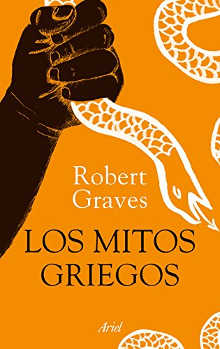
The Greek Myths by Robert Graves continues to delight readers with a compendium of Greek mythology. Each of the myths is narrated by well known essayists from the late Roman period, citing classical Greek sources while recollecting the tales from the Bronze Age. Many of these myths will be familiar to a modern audience, while others are less well known. As retold and interpreted by the incomparable Robert Graves, all of the myths speak from the ancient past to the modern world.
Lucia Graves translated this classic work by her father into the Spanish language as: Los mitos griegos, which is now available in Kindle eBook format. All of the gods and heroes from Greek mythology are exposed for their virtues, faults, adventures, and tribulations in 171 fully indexed chapters, together with annotations, commentary, and interpretations.
Originally published as two volumes in the English language in 1955, and revised by the author in 1960, The Greek Myths includes Robert Graves' own interpretations of the origin and significance of each myth, based upon theories and etymologies that have stirred controversy among some scholars. Some of the myths are presented in more than one version. In true Graves fashion, the entire work employs an imaginative and poetic style lending a literary quality that ensures an enduring appeal.